
Product Support & Resources

Featured Products

Carbon Monoxide Alarm Placement

Correct placement helps a carbon monoxide (CO) alarm detect dangerous gas levels as early as possible and provide critical warning time for you and your family. Because carbon monoxide is colorless, odorless, and impossible to detect without an alarm, proper installation is just as important as having the alarm itself. Placing detectors in the right areas - such as outside sleeping spaces and on each level of the home - helps ensure the alarm can alert occupants before CO levels become life-threatening. Understanding where to install detectors, where to avoid placing them, and how airflow affects CO movement can significantly improve the effectiveness of your home's protection.

Where to Install Carbon Monoxide Detectors

  • Outside each sleeping area so the alarm can wake you at night.
  • On every level of your home, including basements.
  • In main living areas if bedrooms are far from gathering spaces.
  • Follow the manufacturer’s manual for mounting instructions specific to your alarm model.

Best Locations Near Bedrooms

Most people are at the highest risk from carbon monoxide exposure while sleeping. The most important placement is near bedroom areas where the alarm can wake occupants if CO levels become dangerous.

Recommended bedroom-area locations

  • In the hallway outside bedrooms
  • Near the entrance to a bedroom wing
  • On the same level as all sleeping areas
  • Additional coverage in large homes with separated bedroom areas

Install a CO Alarm on Every Level

Carbon monoxide can originate from several sources including furnaces, water heaters, fireplaces, or vehicles in attached garages. Installing alarms on every level helps ensure early warning regardless of where the gas enters the home.

Levels homeowners sometimes forget

  • Basements where furnaces or boilers are located
  • Finished attic living spaces
  • Split-level floors separated by stair landings

Do Carbon Monoxide Detectors Need to Be Near the Floor?

No. Carbon monoxide mixes evenly with air as it circulates through a room. Because of this, CO detectors do not need to be installed near the floor.

What matters more than height

  • Following the mounting instructions in your alarm’s manual
  • Placing alarms where air can circulate freely
  • Ensuring the alarm can be heard clearly from sleeping areas
  • Installing alarms where you can easily access them for testing and maintenance

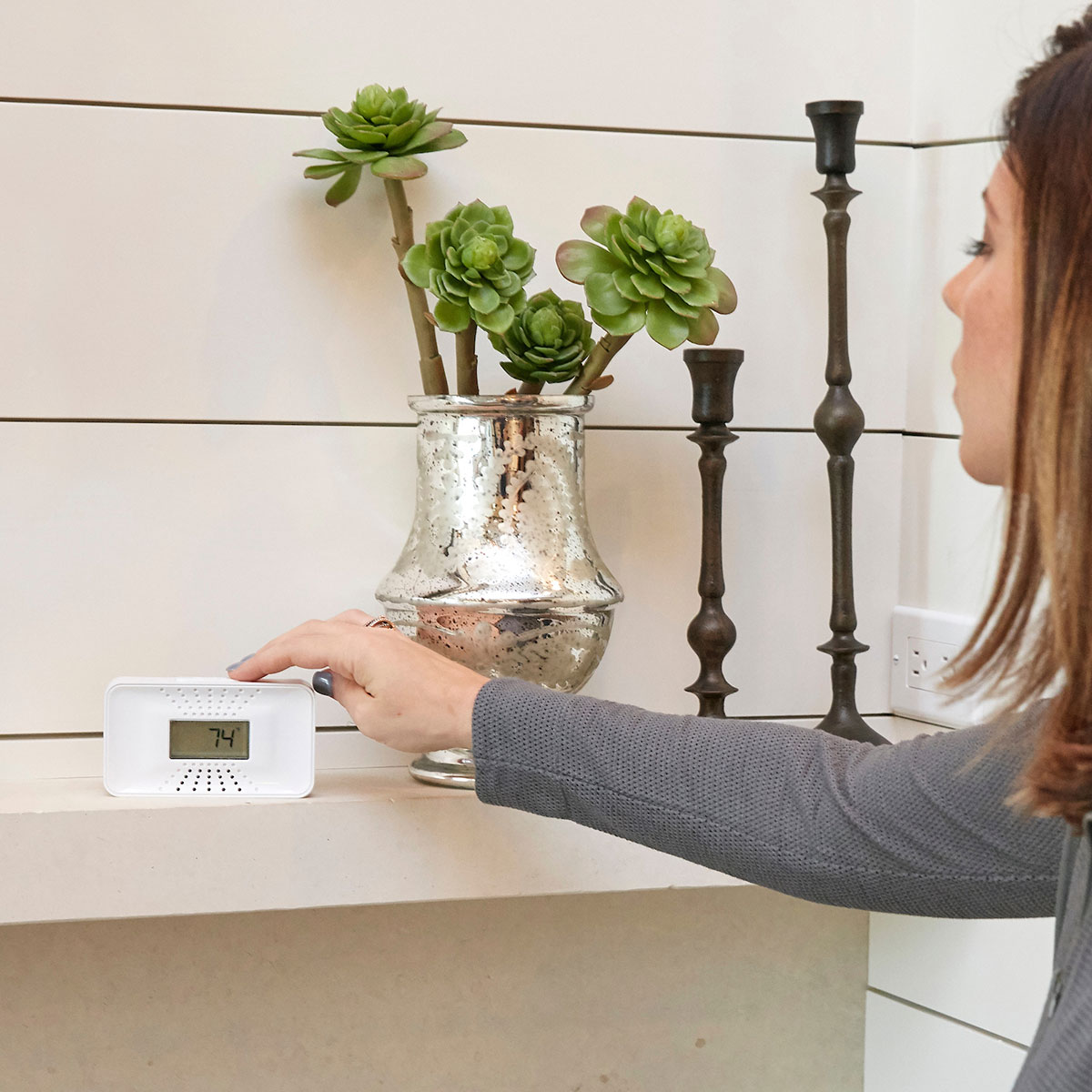
Many CO alarms can be installed on a wall, ceiling, or by plugging into an outlet depending on the model. Always follow the instructions provided with your specific alarm.

Where NOT to Install a Carbon Monoxide Detector

Improper placement can cause nuisance alarms or reduce the alarm’s ability to detect carbon monoxide effectively.

Avoid these locations

  • Inside garages
  • Directly next to furnaces, water heaters, or fireplaces
  • Bathrooms or high-humidity areas
  • Dead-air spaces such as tight corners or behind furniture
  • Directly in front of HVAC vents or ceiling fans
  • Areas exposed to heavy dust, grease, or chemicals

Placement Examples by Home Layout

Single-story homes

  • Install one CO alarm outside the bedroom hallway.
  • Add additional alarms if living areas are far from bedrooms.

Two-story homes

  • Install at least one alarm on each floor.
  • Prioritize the floor containing bedrooms.

Homes with basements

  • Install an alarm in the basement, especially if fuel-burning appliances are present.
  • Install another alarm outside sleeping areas on the main living floor.

Apartments and condos

  • Install a CO alarm outside the sleeping area.
  • If the unit has multiple levels, install an alarm on each level.

FAQs

Do carbon monoxide detectors need to be close to the floor?

No. Carbon monoxide mixes with air and circulates through the room, so detectors do not need to be installed near the floor. Follow the mounting instructions for your specific alarm model.

Where is the most important place to install a CO alarm?

The most important location is outside sleeping areas so the alarm can wake occupants. Alarms should also be installed on every level of the home.

Can I place a carbon monoxide detector next to my furnace?

It’s best to install alarms nearby but not directly next to fuel-burning appliances to reduce nuisance alarms and ensure the device samples typical room air.

Should a CO detector be installed in the garage?

No. Garages often contain vehicle exhaust and temperature extremes that can trigger nuisance alarms. Instead install the detector inside the home near the door leading from the garage.

How often should I test a carbon monoxide alarm?

Test your alarm after installation and regularly afterward. Many households test monthly and replace batteries and units according to the manufacturer’s recommendations.
Related Products

View All Support Topics

Smoke Alarm Installation and Placement

Ensure your home is protected with our First Alert smoke alarm installation guide. Learn the best placement for every room, understand NFPA recommendations, and avoid dead air zones to keep your family safe.

Smoke Alarm Placement

Learn where to install smoke alarms on every level and near bedrooms, plus where not to place them. Avoid “dead air” corners, vents, and ceiling fans for reliable detection.

Interconnecting Smoke Alarms

Learn how to interconnect multiple smoke alarms so all units sound together. Covers hardwired interconnect, wireless options, compatibility tips, and troubleshooting.

Replacing Smoke Alarms

Learn when to replace your First Alert smoke alarm, how to identify your connection type, choose the right replacement, install it safely, and dispose of old alarms responsibly.

Smoke Alarms for Apartments & Rentals

Learn smoke alarm placement rules for apartments and rental homes, who is typically responsible for installation and upkeep, and hardwired vs battery options. Non-legal code basics included.

Carbon Monoxide Alarm Placement

Learn where to place carbon monoxide detectors for best protection - every level, near sleeping areas, and the right distance from appliances. CO alarms don’t need to be near the floor.

Carbon Monoxide Detector Basics

Learn what carbon monoxide is, where it comes from, what CO detectors detect (and don’t), whether they detect natural gas, and how to know if your home needs CO alarms.

Replacing Carbon Monoxide Alarms

Learn when to replace your First Alert carbon monoxide alarm, how to swap battery, plug-in, or hardwired models step-by-step, choose the right replacement, and dispose safely.

CO Alarms for Apartments & Rentals

Learn CO detector placement for apartments and rental homes, who typically handles installation and battery changes, hardwired vs battery vs plug-in options, and basic code concepts (non-legal advice).

Testing & Maintenance

Learn how often to test smoke and CO alarms, how to test step-by-step, what to do if a test fails, how to reset First Alert alarms, and how monthly cleaning helps prevent false alarms.

Haven't found the answer? We can help.

Contact Us

Contact options may differ depending on the type of help you need.

0 $0.00
Top